

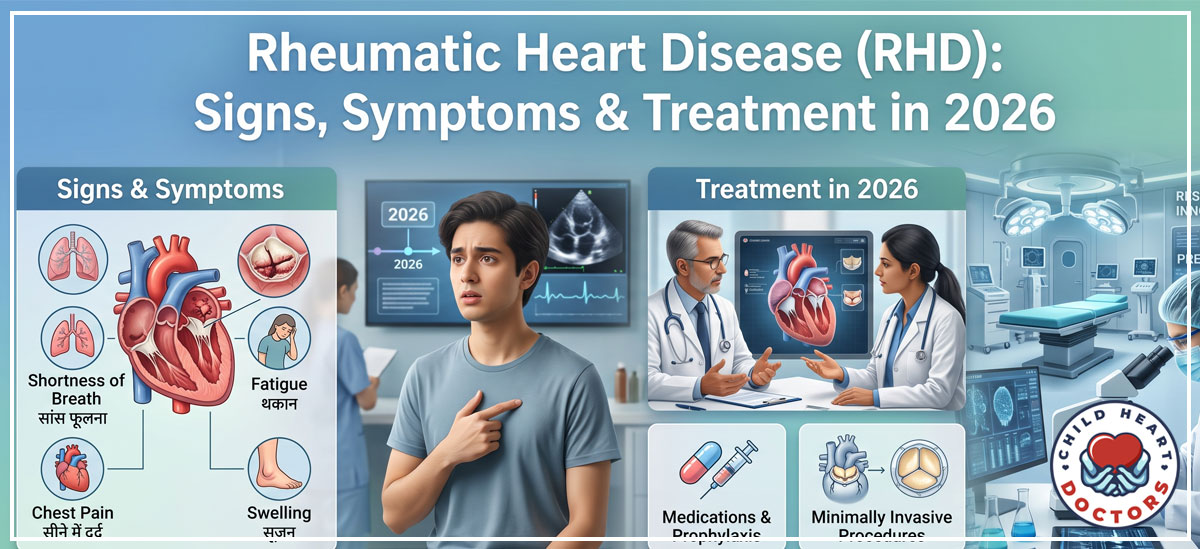
“Rheumatic Heart Disease (RHD): Signs, Symptoms & Treatment in 2026” – a Guide from group of Child Heart Doctor in Howrah
Introduction
Rheumatic Heart Disease (RHD) is a serious heart condition that can develop after acute rheumatic fever, usually following an infection caused by Group A Streptococcus bacteria. It can damage the heart valves and, over time, affect how efficiently the heart pumps blood.
RHD can affect children, teenagers and adults. Early diagnosis, appropriate treatment and regular follow-up can help reduce complications and protect the heart from further damage. The World Health Organization published updated guidance on prevention and diagnosis of rheumatic fever and RHD in 2024, which continues to guide care in 2026.
Children may not always show clear symptoms in the early stages, which makes awareness and regular medical evaluation important. Understanding the signs and symptoms of Rheumatic Heart Disease, available treatment options, and the importance of regular follow-up can help parents take timely action. With proper care from experienced Child Heart Doctors in Howrah, children with RHD can receive the right evaluation, treatment and ongoing monitoring. For families looking for a Pediatric Cardiologist Team in Howrah, early consultation can be an important step toward protecting a child’s heart health.
What Is Rheumatic Heart Disease?
Rheumatic Heart Disease is long-term damage to the heart valves caused by inflammation associated with rheumatic fever. Rheumatic fever can occur after a Group A Streptococcus infection, commonly a throat infection during childhood. Repeated episodes of rheumatic fever can increase the risk of permanent valve damage.
The mitral valve is frequently affected, although other heart valves can also be involved. Damaged valves may become narrowed or may not close properly, allowing blood to flow in the wrong direction.
In children, identifying the problem early is important because untreated or recurrent rheumatic disease may cause progressive valve damage.
How Does Rheumatic Heart Disease Develop?
The condition generally develops through a sequence:
Group A Streptococcal infection → Rheumatic fever → Inflammation of the heart → Valve damage → Rheumatic Heart Disease
Not every child with a sore throat develops rheumatic fever. However, an untreated or inadequately managed streptococcal infection can sometimes trigger an abnormal immune response.
Rheumatic fever may cause inflammation involving the joints, skin, brain and heart. When the heart is affected, repeated inflammation can eventually lead to scarring and permanent valve problems.
Signs & Symptoms of Rheumatic Heart Disease
RHD symptoms can vary depending on the valves affected and the severity of the damage. Some children may have few noticeable symptoms during the early stages.
Common signs and symptoms include:
- Shortness of breath
- Easy tiredness or weakness
- Reduced ability to participate in physical activities
- Fast or irregular heartbeat
- Chest discomfort or pain
- Dizziness or fainting
- Swelling of the feet, ankles or abdomen
- Persistent cough, particularly in more advanced disease
- Poor weight gain in children
- Difficulty keeping up with other children during play
- Heart murmur detected during examination
WHO lists shortness of breath, fatigue, irregular heartbeats, chest pain and fainting among possible symptoms of RHD.
Symptoms of Rheumatic Fever
Parents should also understand the symptoms that may occur before RHD develops. Rheumatic fever can cause:
- Fever
- Painful or swollen joints
- Joint pain that may move from one joint to another
- Unusual movements or coordination problems in some cases
- Skin changes or rash
- Heart-related symptoms
A child with a recent sore throat followed by fever, joint swelling or unusual tiredness should be evaluated by a doctor.
When Should Parents Consult a Child Heart Doctor?
Parents should consider pediatric cardiology evaluation if a child has:
- A history of rheumatic fever
- Repeated episodes of severe sore throat
- A newly detected heart murmur
- Unexplained breathlessness
- Chest discomfort during activity
- Frequent palpitations
- Fainting or dizziness
- Poor growth or poor exercise tolerance
- Swelling of the legs or face
- A known heart valve problem
A heart murmur does not automatically mean that a child has RHD. However, a new or unexplained murmur may require further assessment.
For families seeking Child Heart Doctors in Howrah, a pediatric cardiologist can evaluate the child’s symptoms, medical history and heart function and determine whether further testing is required.
How Is Rheumatic Heart Disease Diagnosed?
Diagnosis usually involves a combination of medical history, physical examination and investigations.
Clinical Examination
The doctor listens to the child’s heart and lungs and looks for signs of valve disease or heart failure.
Echocardiography
An echocardiogram, also called an echo test, uses ultrasound to create images of the heart.
It can help doctors assess:
- Heart valve structure
- Valve narrowing
- Valve leakage
- Heart chamber size
- Heart pumping function
- Blood flow through the valves
Doppler echocardiography is particularly important when evaluating suspected rheumatic heart disease. Current CDC guidance recommends echocardiography/Doppler in confirmed or suspected acute rheumatic fever cases.
ECG
An electrocardiogram records the electrical activity of the heart and can help identify rhythm or conduction abnormalities.
Blood Tests
Blood tests may be recommended depending on the clinical situation, particularly when recent infection or inflammation needs to be assessed.
The doctor may also review previous medical records and previous episodes of rheumatic fever.
Treatment Options in Rheumatic Heart Disease
Rheumatic Heart Disease treatment depends on the child’s age, symptoms, valve involvement and severity of heart damage.
Treatment may include medication, preventive antibiotic therapy, regular cardiac monitoring and, in advanced valve disease, procedures or surgery.
Antibiotic Treatment
If acute rheumatic fever is diagnosed, antibiotics are used to eliminate remaining Group A Streptococcus bacteria. CDC guidance states that antibiotic treatment is indicated even when a current throat infection is not present or a strep test is negative at the time of diagnosis.
The exact antibiotic and dose should always be selected by the treating doctor.
Long-Term Secondary Prevention
Preventing another episode of rheumatic fever is one of the most important parts of managing RHD.
Doctors may prescribe long-term antibiotic prophylaxis, commonly involving benzathine penicillin injections every 3 to 4 weeks or an appropriate oral alternative. The duration depends on factors such as previous rheumatic fever, degree of heart involvement and valve damage.
Parents should follow the prescribed schedule carefully and should not stop prophylaxis without discussing it with the treating doctor.
Anti-Inflammatory Treatment
During acute rheumatic fever, anti-inflammatory medicines may be used to reduce inflammation, fever and joint symptoms. Treatment is individualized according to the child’s condition.
Medicines for Heart Failure
If valve disease has caused heart failure or fluid overload, medicines may be prescribed to reduce symptoms and support heart function.
The choice of medicine depends on the child’s condition and should be determined by a pediatric cardiologist.
Valve Procedures or Surgery
Children with significant valve damage may eventually require an intervention.
Depending on the valve problem, treatment may include:
- Balloon valvotomy in selected cases
- Valve repair
- Valve replacement
- Other cardiac procedures when appropriate
Not every child with RHD requires surgery. Many patients can be managed with medicines, preventive therapy and regular monitoring, especially when the condition is identified early.
Importance of Regular Follow-Up
RHD is not usually a condition that should be managed with a one-time consultation.
Regular follow-up allows the pediatric cardiologist to monitor:
- Valve function
- Heart size
- Heart pumping ability
- Symptoms
- Response to treatment
- Risk of recurrent rheumatic fever
- Need for additional intervention
Follow-up echocardiograms may be recommended depending on the severity of the disease.
For this reason, choosing an experienced Pediatric Cardiologist Team in Howrah can be helpful for families who need continued evaluation and treatment.
Choosing the Top Doctors for Rheumatic Heart Disease Treatment
Choosing the right doctor is important when a child is diagnosed with Rheumatic Heart Disease (RHD). Parents should look for specialists with experience in pediatric heart conditions, valve problems, echocardiography, long-term monitoring and preventive care.
An Experienced pediatric cardiologist team in Howrah and surrounding areas in Kolkata can provide complete care, from accurate diagnosis and regular heart check-ups to medication, prevention of recurrent rheumatic fever and guidance about advanced treatment when required.
When choosing a doctor, consider their pediatric cardiology experience, diagnostic facilities, treatment approach and ability to provide continuous follow-up. A trusted team can help parents understand the child’s condition and choose the most suitable treatment plan for long-term heart health.
A good pediatric cardiac team should be able to provide:
- Detailed clinical evaluation
- Pediatric echocardiography
- ECG and cardiac investigations
- Diagnosis of rheumatic heart disease
- Management of acute rheumatic fever
- Long-term preventive treatment
- Monitoring of valve disease
- Guidance for parents
- Referral for cardiac intervention or surgery when required
Families searching for the Best Team of Baby Heart Doctors in Howrah should focus not only on the doctor’s qualifications but also on access to diagnostic facilities, follow-up care and coordinated pediatric cardiac treatment.
RHD Treatment in Howrah and Surrounding Areas of Kolkata
For families living in Howrah and nearby parts of Kolkata, timely access to pediatric cardiac care can make the treatment journey easier.
Rheumatic Heart Disease (RHD) Treatment in Howrah and surrounding areas in Kolkata may involve several stages, from initial evaluation and echocardiography to long-term medication, preventive antibiotic therapy and monitoring of valve function.
Parents should not wait for severe symptoms before seeking medical advice. A child who has experienced rheumatic fever or has symptoms suggestive of heart valve disease should be assessed by an appropriate specialist.
A coordinated team of Child Heart Doctors in Howrah can help families understand the diagnosis and decide what treatment and follow-up are appropriate.
Can Rheumatic Heart Disease Be Prevented?
Rheumatic Heart Disease (RHD) can often be prevented or its progression reduced with timely care. Early diagnosis and proper treatment of Group A Streptococcal throat infections can help prevent rheumatic fever, which is a major cause of RHD. Children who have already experienced rheumatic fever may need regular preventive antibiotic treatment to reduce the risk of future episodes.
Regular heart check-ups are also important, especially for children with a history of rheumatic fever, heart murmurs, or valve problems. An experienced pediatric cardiologist team in Howrah and surrounding areas in Kolkata can help with early evaluation, echocardiography, preventive treatment, and long-term monitoring.
Why Early RHD Care Matters
Rheumatic Heart Disease can progress gradually. A child may appear well even when a heart valve is already affected.
Early diagnosis provides an opportunity to:
- Identify valve damage
- Prevent recurrent rheumatic fever
- Control symptoms
- Monitor disease progression
- Reduce the risk of complications
- Determine whether and when an intervention is needed
WHO describes RHD as a serious but preventable condition and emphasizes prevention, early diagnosis and appropriate management.
Conclusion
Rheumatic Heart Disease remains an important heart health concern, particularly because it can begin with an infection during childhood and cause long-term valve damage. The good news is that timely diagnosis, appropriate treatment and prevention of recurrent rheumatic fever can make a major difference.
If a child has a history of rheumatic fever, repeated throat infections, unexplained breathlessness, fatigue, palpitations, chest discomfort or a heart murmur, parents should consider a pediatric cardiac evaluation.
For families looking for Rheumatic Heart Disease (RHD) Treatment in Howrah and surrounding areas in Kolkata, consulting experienced Child Heart Doctors in Howrah and a qualified Pediatric Cardiologist Team in Howrah can help ensure appropriate diagnosis, treatment and long-term follow-up.
The goal of a Best Team of Baby Heart Doctors in Howrah should not simply be treating symptoms. It should be protecting the child’s heart, preventing further valve damage and helping the child maintain a healthy and active life.
you suspect your child has a heart issue, do not wait. Early diagnosis often leads to the best outcomes. Use the direct helpline (+91) 91630 48066 today to get an appointment, and take the first critical step toward healing your child’s heart.
Disclaimer: This article is for informational purposes only and does not constitute medical advice. Always consult with a qualified cardiac specialist for diagnosis and treatment related to your personal health condition.
Read Also:
- Get an appointment at Narayana Superspeciality Hospital, Howrah for a pediatric heart doctor: Procedure, Fees, Doctors
- How to Get Best Heart Doctors for Children in Howrah 2026
- Dr. Anwesha Mukherjee: Child Heart Doctor Appointment, Clinics, Availability & Consultation Fees
- List of Eminent Pediatric Cardiologists in Narayana Hospital Howrah in 2026
- A Complete Guide to Pediatric Heart Care in Howrah and Surrounding Areas
- Dr. Rishika Mehta: Child Heart Doctor Appointment, Clinics, Availability & Treatments
- Interventional Cardiology Procedures in Children: Explained by A Howrah Child Heart Specialist
- Specialized Heart Tests and Diagnosis for Your Child in Howrah
- Comprehensive Heart Care from a Child Heart Doctor in Assam
- Pediatric Interventional Cardiologist in Howrah, West Bengal
- Advanced Care for Pediatric Heart Failure: Insights from a Child Heart Expert in Howrah
- Common Acquired Heart Conditions in Children
- Understanding Pulmonary Arterial Hypertension (PAH) in Children
- A Guide to Interventional Cardiology Procedures by Child Heart Specialist in Howrah
- Complete Guide to Congenital Heart Disease Care in Kolkata 2026
- Fetal Echocardiography Test in Howrah: Purpose, Procedure, and Risks