

Table of Contents
ToggleA comprehensive guide in ‘Understanding Pulmonary Arterial Hypertension (PAH) in Children‘ by a group of Pediatric Interventional Cardiologists in Howrah
Introduction
When it comes to children’s heart health, some conditions are not very common but can be serious if ignored. Heart conditions in children can be difficult to recognize because the symptoms are often mild in the early stages. One such condition that parents should be aware of is Pulmonary Arterial Hypertension (PAH) in Children. Although it is not very common, it is a serious health issue that affects the blood vessels connecting the heart and lungs. If left untreated, it can put extra strain on a child’s heart and gradually affect their overall health and development.
Many parents may confuse the early signs of PAH with common problems like tiredness, breathing difficulty, or poor stamina during play. This is why early awareness and timely consultation with a Child Heart Doctor in Kolkata and Howrah are extremely important. Proper evaluation by the Best child heart doctor in West Bengal can help detect the condition early and start treatment before complications arise.
In this blog, we will explain Pulmonary Arterial Hypertension (PAH) in Children in a simple way, including its causes, symptoms, diagnosis, and available treatment options so that parents can better understand this condition and take timely action.
Undersanding Pulmonary Arterial Hypertension (PAH) in Children
What is Pulmonary Arterial Hypertension (PAH) in Children?
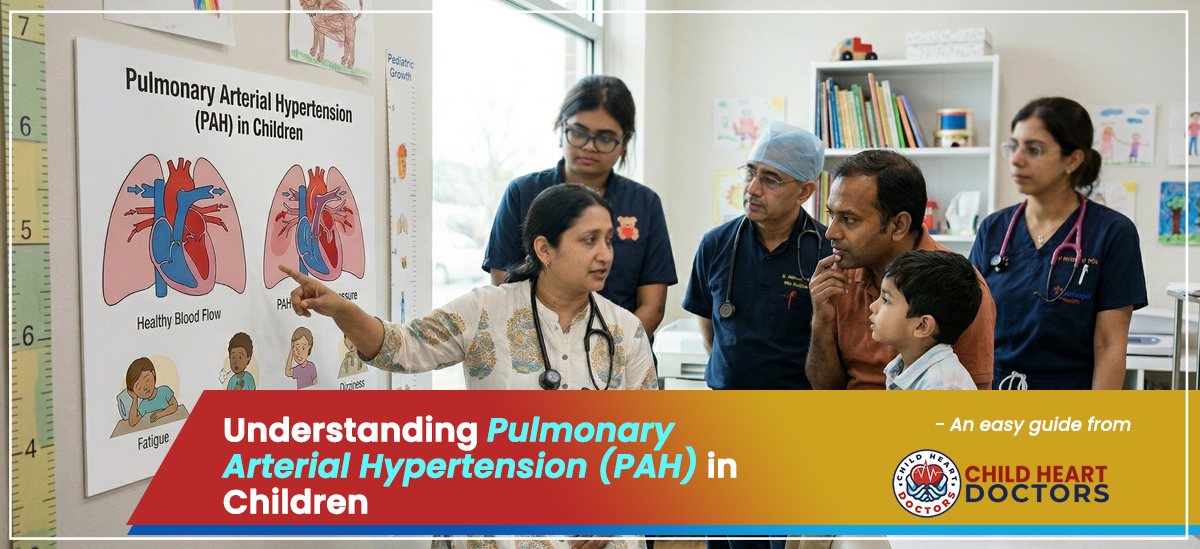
Pulmonary Arterial Hypertension (PAH) is a condition where the blood pressure in the arteries of the lungs becomes abnormally high. These arteries carry blood from the heart to the lungs for oxygen.
In children with PAH:
- The lung arteries become narrow, thick, or stiff
- Blood flow becomes difficult
- The heart has to work harder to pump blood
Over time, this extra pressure can weaken the heart, especially the right side, and lead to serious complications if not treated early .
Why is PAH Serious in Children?
PAH is rare, but it is a progressive condition, which means it can get worse over time.
If untreated:
- It can damage the heart
- Reduce oxygen supply to the body
- Affect a child’s growth and daily activities
- In severe cases, lead to heart failure
That’s why early diagnosis by the best child heart doctor in West Bengal is extremely important.
Causes of Pulmonary Arterial Hypertension in Children
PAH can develop due to different reasons. Often, it is linked to other health conditions.
Congenital Heart Defects
Children born with heart problems (like holes in the heart) are at higher risk. These defects can disturb normal blood flow and increase pressure in lung arteries.
Lung Diseases
Chronic lung problems or underdeveloped lungs (especially in premature babies) can lead to PAH.
Genetic Factors
Sometimes, PAH runs in families due to inherited gene changes.
Infections or Medical Conditions
Conditions like:
- Down syndrome
- Cystic fibrosis
- Viral infections
can increase the risk.
Unknown Causes
In some children, the cause is not clear. This is called idiopathic PAH.
Types of Pulmonary Hypertension in Children
Pulmonary hypertension in children is not just one single condition. It is divided into different types based on the cause and how it affects the heart and lungs.
Pulmonary Arterial Hypertension (PAH)
This is the type where the arteries themselves are affected and become narrow or stiff, making it harder for blood to pass through.
Pulmonary Hypertension due to Heart Disease
Some children are born with heart defects. These problems can change the normal blood flow and increase pressure in the lung arteries.
Pulmonary Hypertension due to Lung Disease
Lung problems like chronic lung disease or underdeveloped lungs in premature babies can lead to high pressure in the lungs.
Pulmonary Hypertension due to Other Causes
Sometimes, pulmonary hypertension can happen due to infections, genetic conditions, or other medical issues. In some cases, the exact cause is not known.
Understanding the type of pulmonary hypertension helps doctors choose the right treatment and care for the child.
Signs & Symptoms of PAH in Children
One of the biggest challenges is that symptoms often look like common childhood problems such as asthma or fatigue.
Common Symptoms
- Shortness of breath (especially during play)
- Tiredness or low energy
- Fainting or dizziness
- Fast breathing
- Chest pain
Other Warning Signs
- Blue lips or skin (low oxygen)
- Swelling in legs or abdomen
- Poor growth or feeding issues in infants
Symptoms may start mild and gradually become more noticeable.
When Should Parents Be Concerned?
You should consult a Child Heart Doctor in Kolkata and Howrah if your child:
- Gets tired quickly compared to other children
- Has difficulty breathing during normal activity
- Faints or feels dizzy often
- Shows poor weight gain
Early medical attention can make a big difference.
How is PAH Diagnosed?
Diagnosing PAH requires proper evaluation by specialists, usually an experienced child cardiologist team in Kolkata.
Common Tests Include:
Echocardiography (Echo)
- A simple, non-invasive ultrasound of the heart
- Helps estimate pressure in lung arteries
Cardiac Catheterization
- Measures exact pressure inside the heart and lungs
- Confirms the diagnosis
Other Tests
- Chest X-ray
- Blood tests
- Oxygen level monitoring
These tests help doctors understand the severity and cause of PAH.
Treatment Options for PAH in Children
Although PAH may not always be completely curable, it can be managed effectively with proper treatment.
Medications
Doctors may prescribe a few medicines help reduce pressure in lung arteries.
Oxygen Therapy
Some children need extra oxygen to improve blood oxygen levels.
Treating the Underlying Cause
If PAH is caused by:
- Heart defects → surgery may be needed
- Lung disease → targeted treatment
Advanced Treatments
In severe cases:
- Interventional procedures
- Surgery
- Rarely, lung or heart-lung transplant
Early treatment improves outcomes significantly.
Lifestyle and Care Tips for Children with PAH
Managing PAH is not just about medicines. Daily care also plays a key role.
Parents should:
- Ensure regular follow-ups with the best child heart doctor in West Bengal
- Avoid excessive physical strain
- Maintain proper nutrition
- Watch for worsening symptoms
- Keep vaccinations up to date
A supportive environment helps children live better with the condition.
Long-Term Outlook
The good news is that medical advancements have improved the survival and quality of life for children with PAH.
- Some children improve with treatment
- Premature babies may outgrow the condition as lungs develop
- Regular monitoring is essential
However, untreated PAH can lead to serious complications, so ongoing care is necessary .
Importance of Early Diagnosis and Expert Care
Early diagnosis plays a very important role in managing heart conditions in children. Many serious problems start with mild symptoms, which can be easily ignored. If the condition is detected at an early stage, treatment can begin sooner and the chances of complications are much lower.
Expert care is equally important. A trained child heart specialist understands how to identify the condition correctly and choose the right treatment plan. With proper guidance, regular monitoring, and timely treatment, children can live healthier and more active lives.
Treating Pulmonary Arterial Hypertension (PAH) in children usually needs a team of different specialists, because the condition affects both the heart and lungs. Proper care of PAH in children requires a team approach.
Here are the main doctors involved:
Pediatric Cardiologists (Child Heart Specialist)
This is the most important doctor for PAH treatment. A pediatric cardiologist:
- Diagnoses the condition
- Monitors heart function
- Prescribes medicines to reduce pressure in lung arteries
If you are from Kolkata and the surrounding areas of Howrah, you need to first consult a Child Heart Doctor in Kolkata and Howrah for proper evaluation.
Pediatric Pulmonologist (Child Lung Specialist)
Since PAH affects the lungs, this specialist:
- Manages lung-related problems
- Helps improve breathing
- Guides oxygen therapy if needed
Pediatric Intensivist (Intensive care experts)
In severe cases, children may need care in an ICU. A pediatric intensivist:
- Handles emergencies
- Monitors vital functions
- Supports life-saving treatment
Getting care from the Best child cardiologist team in Kolkata ensures:
- Accurate diagnosis
- Advanced treatment
- Continuous monitoring
Pediatric Cardiac Surgeon
If PAH is caused by a congenital heart defect, surgery may be required. A cardiac surgeon:
- Repairs heart defects
- Improves blood flow between heart and lungs
Other Support Specialists
Depending on the condition, additional experts may be involved:
- Nutritionist (for proper growth)
- Physiotherapist (to improve activity levels)
- Genetic specialist (if hereditary factors are suspected)
If you are in West Bengal, consulting a Child Heart Doctor in West Bengal at the earliest sign of symptoms can prevent complications. For the best results, treatment should always be managed by an experienced and coordinated team, often considered the best child heart doctor in West Bengal.
Conclusion
Pulmonary Arterial Hypertension (PAH) in children is a serious but manageable condition when detected early. Many children with PAH can lead active and fulfilling lives with the right treatment and care.
As a parent, your awareness is the first step. If something feels unusual about your child’s breathing, energy level, or growth, do not ignore it.
Timely consultation with the best child heart doctor in Kolkata and surrounding areas in West Bengal can make a life-changing difference.
FAQ's on Pulmonary Arterial Hypertension (PAH) in Children
What exactly is Pulmonary Arterial Hypertension (PAH) in children?
What are the early symptoms of PAH in children?
What causes PAH in pediatric patients?
How do doctors diagnose PAH in children?
Is Pulmonary Arterial Hypertension in children curable?
Is PAH in children a life-threatening condition?
What are the treatment options for pediatric PAH?
Can a child with PAH participate in sports or exercise?
Is PAH hereditary in families?
Where to find doctor for Pulmonary Arterial Hypertension (PAH) in Children in Kolkata & Howrah?
Disclaimer: This article is for informational purposes only and does not constitute medical advice. Always consult with a qualified cardiac specialist for diagnosis and treatment related to your personal health condition.
Read Also:
- Child Heart Doctor’s Guide to Common Heart Defects and Treatment in Bangladesh
- Advanced Care for Pediatric Heart Failure: Insights from a Child Heart Expert in Howrah
- Common Acquired Heart Conditions in Children
- A Guide to Interventional Cardiology Procedures by Child Heart Specialist in Howrah
- Complete Guide to Congenital Heart Disease Care in Kolkata 2026
- Fetal Echocardiography Test in Howrah: Purpose, Procedure, and Risks
- VSD Treatment in Children in Kolkata: Symptoms, Diagnosis and Treatment Options
- Pediatric Heart Care in Jharkhand in 2026 by Child Heart Doctors
- Early Diagnosis of Heart Conditions by a Newborn Heart Doctor in Howrah
- Interventional Cardiology: Minimally Invasive Procedures for Children
- Caring for a Baby’s Heart: Insights from a Pediatric Heart Doctor in Howrah
- Common Heart Conditions in Children
- Pediatric Cardiac Care Availability in Jharkhand
- A Guide to Pediatric Arrhythmias from the Child Heart Doctors
- Finding the Best Pediatric Cardiologist in Howrah for Your Child
- Advanced Cardiac Imaging Services for Children in Howrah