

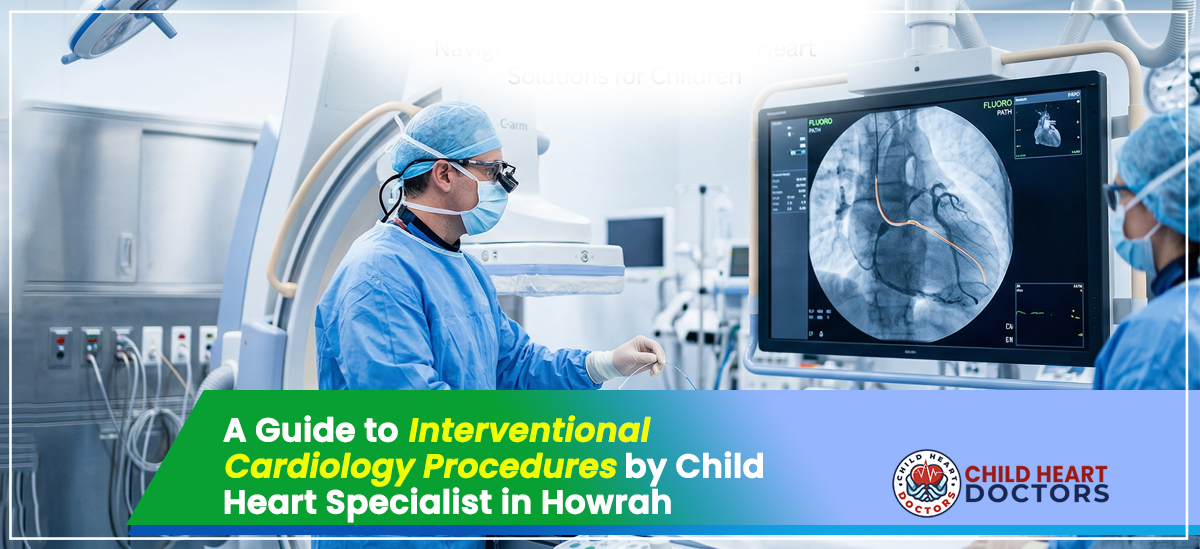
‘A Guide to Interventional Cardiology Procedures’ by a group of Pediatric Interventional Cardiologists in Howrah
Introduction
When parents hear that their child may need a heart procedure, it naturally creates fear and confusion. Many families still believe that heart treatment always means open surgery and long recovery. But medical science has advanced a lot. Today, many heart problems in children can be treated safely through Interventional Cardiology Procedures that do not require major surgery.
As a team of child heart specialists in Howrah, we meet many worried parents every week. Our goal is simple. We want to explain the problem clearly, suggest the safest treatment, and help children recover quickly. In this blog, we will explain what interventional cardiology means, how it helps children, and why choosing an experienced Interventional Cardiologist in Kolkata and Howrah makes a big difference.
What Are Interventional Cardiology Procedures?
Interventional Cardiology Procedures are minimally invasive treatments done using thin tubes called catheters. These catheters are inserted through a small puncture, usually in the leg, and guided to the heart using advanced imaging.
Unlike open-heart surgery, there is:
- No large chest cut
- No major scar
- Shorter hospital stay
- Faster recovery
For many heart defects, this method is safe, effective, and child-friendly.
A trained Interventional Cardiologist in Kolkata and Howrah performs these procedures in a special lab called a cath lab. The child is given anesthesia or sedation, so they do not feel pain during the procedure.
Why Children Need Interventional Cardiology
Heart problems in children are often present from birth. These are called congenital heart defects. Some are small and may close on their own. Others require treatment.
As a Child Heart Doctor in West Bengal, we commonly see conditions like:
- Hole in the heart (ASD, VSD, PDA)
- Narrow heart valves
- Narrow blood vessels
- Abnormal heart rhythms
In many of these cases, Interventional Cardiology Procedures can correct the problem without open surgery.
Common Interventional Cardiology Procedures in Children
Let us understand the most common procedures we perform.
Device Closure of ASD (Atrial Septal Defect)
ASD is a hole between the upper chambers of the heart. If the hole is large, it can cause breathing difficulty, poor weight gain, and frequent infections.
In this procedure:
- A catheter is passed through a vein.
- A special device is placed to close the hole.
- The device stays permanently inside the heart.
The child usually goes home within one or two days.
Device Closure of VSD (Ventricular Septal Defect)
VSD is a hole between the lower chambers of the heart. Small VSDs may close naturally, but larger ones may need treatment.
Selected cases can be treated using a catheter-based device closure. This avoids open-heart surgery and reduces recovery time.
PDA Device Closure (Patent Ductus Arteriosus)
PDA is a condition where a blood vessel that should close after birth remains open. This can lead to fast breathing and poor growth.
Through Interventional Cardiology Procedures:
- A small device or coil is inserted.
- The vessel is closed from inside.
- The procedure is quick and very effective.
This is one of the most common procedures done by an experienced Interventional Cardiologist in Kolkata and Howrah.
Balloon Valvuloplasty
Sometimes heart valves become narrow. This condition is called stenosis.
In balloon valvuloplasty:
- A balloon catheter is placed across the narrow valve.
- The balloon is inflated.
- The valve opens properly.
This improves blood flow and reduces symptoms immediately.
Balloon Angioplasty for Narrow Vessels
Some children have narrowing in important blood vessels, such as coarctation of the aorta or narrowing after previous heart surgery.
In balloon angioplasty:
- A balloon is used to widen the narrowed area.
- In some cases, a stent is placed to keep the vessel open.
This improves circulation and reduces strain on the heart.
Pediatric Cardiac Catheterization for Diagnosis
Not all catheter procedures are treatments. Some are diagnostic.
Cardiac catheterization helps us:
- Measure heart pressure
- Check oxygen levels
- Study blood flow
This helps the Child Heart Doctor in West Bengal decide the best treatment plan.
Device Closure of Other Abnormal Connections
Some children are born with abnormal connections between blood vessels. In selected cases, these can also be closed using devices through catheter-based techniques.
Each case is different. Proper evaluation with echocardiography and other tests is essential before planning the procedure.
Benefits of Interventional Cardiology Procedures for Children
Parents often ask why we prefer catheter-based treatment when possible. The benefits are clear:
- Small incision, no big scar
- Less pain
- Short hospital stay
- Quick return to school and normal life
- Lower infection risk
- High success rate
For children, faster recovery means less emotional stress and better overall development.
Is It Safe for Children?
The simple answer is yes. In most cases, Interventional Cardiology Procedures are very safe for children when performed by an experienced interventional cardiologist.
Safety depends on:
- Proper diagnosis
- Skilled Interventional Cardiologist
- Well-equipped cath lab
- Pediatric anesthesia support
- Good post-procedure care
As a team of child heart specialists in Howrah, we follow strict safety protocols. We also guide parents before and after the procedure to ensure smooth recovery.
How to Know If Your Child Needs Interventional Treatment?
You should consult a Child Heart Doctor in West Bengal if your child has:
- Fast breathing
- Poor weight gain
- Blue lips or fingers
- Frequent chest infections
- Heart murmur detected by a pediatrician
- Tiredness during play
Early diagnosis makes treatment easier and safer.
Role of an Interventional Cardiologist in Kolkata and Howrah
Not all heart specialists perform interventional procedures. It requires special training and experience.
An experienced Interventional Cardiologist in Kolkata and Howrah:
- Carefully studies echocardiography reports
- Explains treatment options clearly
- Chooses the safest method
- Performs the procedure in a controlled setup
- Monitors recovery closely
Our focus is always on child-centered care. We believe parents should fully understand the condition before making any decision.
How Are These Procedures Performed – What Parents Can Expect
We know that handing your child over to a medical team is one of the hardest things you’ll ever do. So let us walk you through what typically happens on procedure day.
Your child will be admitted to the hospital, usually in the morning. Blood tests, an echo, and an ECG are done beforehand. Your child will be given general anesthesia or conscious sedation, depending on their age and the procedure. The interventional cardiologist will insert a catheter, usually through the femoral vein or artery in the groin. Using live X-ray imaging (fluoroscopy) and echocardiography, the procedure is performed with precision. The whole process typically takes between one to three hours. After the procedure, your child is moved to a recovery area and monitored closely. In most cases, discharge happens within one to two days.
We walk every family through this process before the procedure — so there are no surprises.
Are These Procedures Safe for Children?
This is always the first question parents ask. And it’s the right one.
Yes — when performed by an experienced team in a well-equipped center, interventional cardiology procedures are considered very safe for children. Complications are rare, and the risk-benefit balance is strongly in favor of intervention for most indicated conditions.
That said, no medical procedure is completely without risk. Possible complications — though uncommon — include bleeding at the catheter site, arrhythmias (irregular heart rhythms), device migration, or allergic reactions to contrast dye. We take every precaution and discuss all risks transparently with families.
The key is choosing a center with experience, proper infrastructure, and a dedicated pediatric cardiac team.
Recovery After Interventional Cardiology Procedures
One of the biggest advantages of interventional procedures over open-heart surgery is the significantly shorter recovery time.
Most children are up and about within a day after the procedure. There may be some soreness or bruising at the catheter entry site, but this resolves quickly. Activity restrictions vary by procedure — for most device closures, we recommend avoiding vigorous physical activity for four to six weeks. Regular follow-up visits are scheduled to monitor device position, heart function, and overall recovery. Most children return to school within a week.
Compare this to open-heart surgery, where recovery can take weeks to months — and you’ll understand why interventional cardiology has become the preferred approach wherever it’s applicable.
Why Choose a Child Heart Doctor in West Bengal?
West Bengal — and Howrah and Kolkata in particular — has made significant strides in pediatric cardiac care over the past decade. Families no longer need to travel to far-off cities for specialized treatment. Today, world-class interventional cardiology facilities are available right here.
As a child heart doctor in West Bengal, our commitment is to bring the best of modern medicine to every child — regardless of which corner of the state they come from. We regularly see patients from districts across West Bengal, including Hooghly, Medinipur, Murshidabad, and beyond.
Accessible, affordable, and advanced — that’s the standard we hold ourselves to.
When Is Surgery Still Needed?
While Interventional Cardiology Procedures are advanced and effective, not all heart defects can be treated this way.
Complex heart defects may still require surgery. In such cases, we work closely with pediatric cardiac surgeons to ensure the best outcome.
Our approach is simple. We always choose the safest and most effective option for the child.
Why Early Treatment Matters
Delaying treatment can lead to:
- Lung pressure problems
- Growth delay
- Repeated infections
- Permanent heart damage
Early consultation with an Interventional Cardiologist in Kolkata and Howrah can prevent long-term complications.
As child heart specialists in Howrah, we strongly encourage parents not to ignore symptoms.
Emotional Support for Parents
We understand that heart treatment in children is not just a medical issue. It is emotional for the whole family.
Our team believes in:
- Clear communication
- Honest advice
- Step-by-step explanation
- Support before and after the procedure
When parents feel informed, they feel stronger.
Our Team of Child Heart Specialists in Howrah – A Note From Us
We are a dedicated team of pediatric and interventional cardiologists in Kolkata and Howrah who have built our practice around one goal: giving children with heart conditions the best possible chance at a healthy, full life.
Every child who walks through our doors is treated as an individual — not a diagnosis. We take time to explain, to listen, to answer every question (even the ones parents are embarrassed to ask). We believe that the best outcomes happen when families and doctors work as a team.
If your child has been diagnosed with a heart condition, or if you suspect something may not be right, please don’t wait. Early evaluation saves lives. And you don’t have to navigate this alone.
Life After Interventional Cardiology Procedures
In most cases, children can:
- Go back to school within a week
- Play normally after doctor’s advice
- Live a healthy, active life
Regular follow-up with a Child Heart Doctor in West Bengal is important. We usually schedule periodic check-ups with echocardiography to monitor progress.
Final Words from the Team of Child Heart Specialist in Howrah
Interventional Cardiology Procedures have changed the way we treat heart problems in children. What once required major surgery can now often be treated through a small puncture in the leg.
With the right diagnosis, modern technology, and an experienced Interventional Cardiologist in Kolkata and Howrah, children can recover quickly and lead healthy lives.
If you suspect any heart-related symptoms in your child, do not wait. Early consultation with a trusted Child Heart Doctor in West Bengal can make all the difference.
Your child’s heart deserves expert care, timely treatment, and a future full of energy and happiness.
Conclusion
Interventional cardiology procedures have genuinely transformed what’s possible in pediatric heart care. What once required major surgery can now often be treated with a thin tube, a skilled pair of hands, and technology that would have seemed like science fiction not too long ago.
As child heart specialists in Howrah, we are proud to offer these advanced procedures close to home — saving families the stress, expense, and time of traveling far for care. Whether it’s a simple PDA closure or a complex stenting procedure, our team approaches every case with the same commitment: your child’s heart is in safe hands.
If you have questions or concerns about your child’s heart health, reach out to us. We’re here — and we’re listening.
FAQs on Interventional Cardiology Procedures
At what age can heart procedures be done?
Will my child be asleep during the procedure?
How long is the recovery after device closure?
Is pediatric heart care available in Howrah?
How much does child heart treatment cost?
Disclaimer: This article is for informational purposes only and does not constitute medical advice. Always consult with a qualified cardiac specialist for diagnosis and treatment related to your personal health condition.
Read Also:
- Child Heart Doctor’s Guide to Common Heart Defects and Treatment in Bangladesh
- Complete Guide to Congenital Heart Disease Care in Kolkata 2026
- Fetal Echocardiography Test in Howrah: Purpose, Procedure, and Risks
- VSD Treatment in Children in Kolkata: Symptoms, Diagnosis and Treatment Options
- Pediatric Heart Care in Jharkhand in 2026 by Child Heart Doctors
- Early Diagnosis of Heart Conditions by a Newborn Heart Doctor in Howrah
- Interventional Cardiology: Minimally Invasive Procedures for Children
- Caring for a Baby’s Heart: Insights from a Pediatric Heart Doctor in Howrah
- Common Heart Conditions in Children
- Pediatric Cardiac Care Availability in Jharkhand
- A Guide to Pediatric Arrhythmias from the Child Heart Doctors
- Finding the Best Pediatric Cardiologist in Howrah for Your Child
- Advanced Cardiac Imaging Services for Children in Howrah