

An essential guide on ‘VSD Treatment in Children in Kolkata: Symptoms, Diagnosis and Treatment Options’ by a group of Child Heart Doctors
Table of Contents
ToggleIntroduction
Hearing that your child has a heart condition can be worrying for any parent. One such common condition is Ventricular Septal Defect (VSD), a hole in the wall that separates the lower chambers of the heart. While the diagnosis may sound serious, the good news is that VSD Treatment in Children in Kolkata, has advanced greatly over the years. With early detection and the right medical care, most children with VSD can grow up healthy and active.
This blog is written to help parents clearly understand the symptoms of VSD, how it is diagnosed, and the treatment options available today. From regular monitoring and medicines to modern procedures like device closure and surgery, we will explain each step in simple and easy language. We will also guide you on choosing the right specialists, including the Best child heart doctor team for VSD device closure in Kolkata and finding the Best cardiologist in Howrah for VSD closure, so your child receives safe and expert care.
If you are a parent looking for reliable information and reassurance, this guide will help you make informed decisions about your child’s heart health with confidence and clarity.
Understanding Ventricular Septal Defect (VSD) in Children
What is Congenital Heart Disease?
Congenital heart disease is a heart problem that a baby is born with. It happens when the heart does not form properly during pregnancy. This condition can affect the heart’s structure, such as its walls, valves, or blood vessels, and may change the normal flow of blood through the heart.
Some congenital heart diseases are mild and cause no symptoms, while others are more serious and need medical treatment early in life. With early diagnosis and proper care, many children with congenital heart disease can grow up healthy and active.
What Is a Ventricular Septal Defect (VSD)?
VSD is one of the most commonly diagnosed congenital heart conditions. A Ventricular Septal Defect (VSD) is a heart condition that is present from birth. It happens when there is a hole in the wall that separates the two lower chambers of the heart, called the ventricles. Because of this hole, blood can flow from the left side of the heart to the right side instead of moving in the normal direction.
When this happens, extra blood goes to the lungs, and the heart has to work harder than usual. Small VSDs may not cause any problems and can even close on their own as a child grows. Larger VSDs, however, may lead to symptoms like fast breathing, poor weight gain, or frequent infections if not treated.
With proper medical care and regular checkups, most children with VSD can lead healthy and active lives. Early diagnosis helps doctors decide the best treatment plan for each child.
Recognizing Symptoms of VSD in Children
Symptoms of VSD depend on the size of the hole and how much extra blood flow it causes between the heart and lungs. Small VSDs often do not produce noticeable symptoms, but larger ones often do.
Here are common symptoms parents should know:
Common Symptoms in Babies and Young Children
- Fast or difficult breathing – the child seems breathless even during rest.
- Poor weight gain – despite good feeding, a baby may not grow as expected.
- Trouble feeding or tiring easily during feeding – feeding becomes exhausting.
- Heart murmur – a whooshing sound heard by a doctor using a stethoscope.
- Sweating or irritability during feeds or activity – signs the heart is working too hard.
Sometimes symptoms are mild and subtle, especially when the hole is small. Other times, larger VSDs can significantly affect a child’s growth and activity.
Symptoms of VSD in Infants vs. Older Children
The symptoms of Ventricular Septal Defect (VSD) can be different in infants and older children. This mainly depends on the size of the hole in the heart and how much it affects blood flow.
Symptoms of VSD in Infants:
In babies, symptoms often appear within the first few weeks or months after birth if the VSD is moderate or large. Infants may breathe fast or seem to struggle while breathing. Many babies get tired easily during feeding. Poor weight gain is also common, even when feeding seems adequate. Excessive sweating, especially during feeding or crying, can be another sign. Doctors often detect a heart murmur during routine checkups in infants with VSD.
Symptoms of VSD in Older Children:
Older children with a small VSD may have no symptoms at all and lead normal, active lives. If the VSD is larger, children may feel tired quickly during physical activity. They may complain of shortness of breath while playing or exercising. Some children experience frequent chest infections or delayed growth compared to their peers. In rare cases, older children may develop signs of heart strain if the defect is left untreated.
Recognizing these symptoms early helps parents seek timely medical care and ensures better outcomes for children with VSD.
The Importance of Early Diagnosis
Early and accurate diagnosis is crucial for determining the best treatment of VSD. When a doctor suspects this condition, a few simple and reliable tests are used to confirm it and understand how serious it is. The process usually starts with a basic physical check-up. A pediatric cardiologist listens to the child’s heart carefully. In many cases, VSD causes a soft blowing or whooshing sound, known as a heart murmur. Hearing this sound is often the first sign that alerts the doctor to a possible hole in the heart.From there, your child may be referred to a child heart specialist (pediatric cardiologist) for detailed tests.
Tests Used for Diagnosis
Here’s how cardiologists typically confirm VSD:
Echocardiogram (Echo):
- This is the most important test. It uses sound waves to make a moving picture of the heart and shows the size and location of the VSD.
Electrocardiogram (ECG):
- This test records the heart’s electrical activity and can reveal rhythm issues or stress on the heart.
Chest X-ray:
- It shows the size of the heart and whether the lungs have extra blood flow.
Cardiac catheterization:
- Sometimes used to measure pressures inside the heart and guide therapy decisions, though less commonly for simple diagnosis.
A combination of these tests helps the cardiologist determine how serious the VSD is and the best course of action.
VSD Treatment in Children: Available Options
The approach to treating VSD depends on the size of the hole, symptoms, and the child’s overall health. In many children, especially those with small defects, careful monitoring is all that is needed. But when a VSD is large or causing problems, treatment can include medications, nutrition support, cardiac catheter procedures, or surgery.
- Observation (Watchful Waiting): For small VSDs that cause no symptoms, doctors may simply monitor the child’s heart over time with regular checkups. Many of these small holes close on their own as the child grows, often by age 2–4.
- Medications: While medications won’t close the hole, they help reduce symptoms and support the heart:
- Diuretics (water pills) to reduce extra fluid in the body.
- ACE inhibitors and other medications to help the heart pump more efficiently.
Medications are often used while waiting to see if a VSD closes naturally or to prepare a child for surgery.
- Nutritional Support: Infants with larger VSDs may tire easily during feeding and might not gain enough weight. Specialists often recommend high-calorie formulas or fortified breast milk to help with growth. In some cases, temporary feeding tubes may be used.
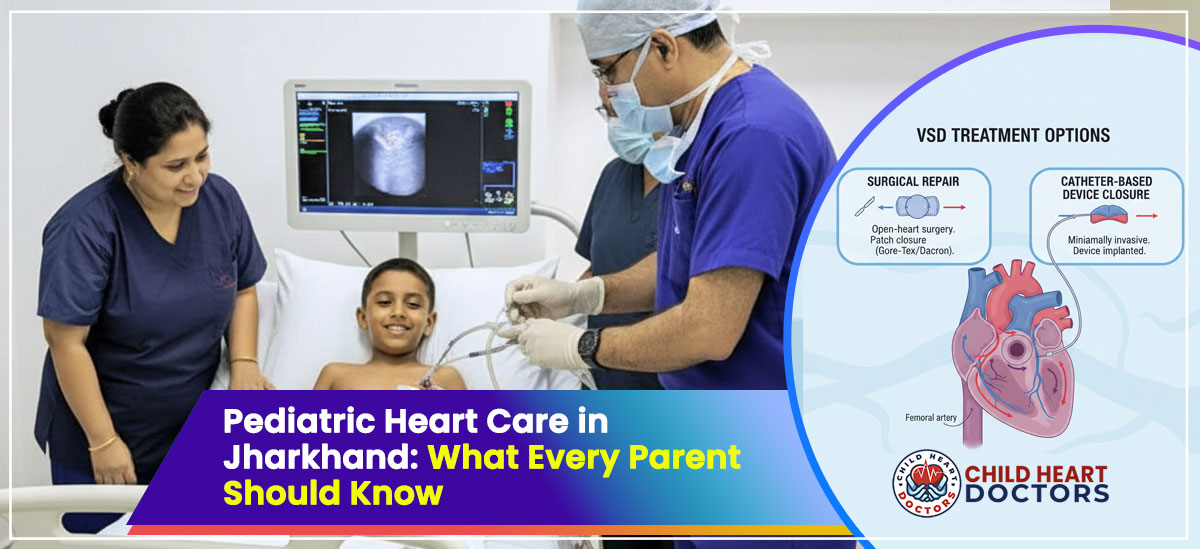
- Cardiac Catheterization and Device Closure: Some VSDs can be closed using a catheter-based approach, often called device closure. A thin tube is inserted into a blood vessel and guided to the heart. A small device (occluder) is placed in the VSD to seal it off.This minimally invasive method avoids opening the chest and generally allows for shorter recovery. However, not all VSDs are suitable for device closure — it depends on the location and type of defect.Recent studies show that transcatheter device closure can be safe and effective in many children, even showing high success rates in selected cases.
- Surgical Repair: For larger VSDs or those causing significant symptoms, surgical repair might be necessary. This traditional approach involves open-heart surgery where surgeons close the hole using a patch made from pericardium (the heart’s lining) or synthetic material.
While the thought of your child undergoing heart surgery is understandably frightening, it’s important to know that this is a well-established procedure with excellent success rates. Pediatric cardiac surgeons have refined these techniques over decades, making them remarkably safe and effective.Open-heart surgery has a very high success rate, and most children recover fully and go on to lead healthy, active lives.
VSD Device Closure: A Modern Approach
How Does VSD Device Closure Work?
VSD device closure is performed through cardiac catheterization—think of it as keyhole surgery for the heart. Instead of opening the chest, cardiologists insert a thin, flexible tube (catheter) through a blood vessel, usually in the groin, and guide it to the heart using X-ray imaging.
Once the catheter reaches the VSD, a special closure device—typically made of biocompatible materials—is deployed to seal the hole. Over time, the heart’s natural tissue grows around the device, making it a permanent part of the heart. The procedure is usually done under anesthesia, and most children recover quickly with only a short hospital stay.
Benefits and Success Rates
VSD device closure offers many advantages, especially for selected types of ventricular septal defects. One of the biggest benefits is that it avoids open-heart surgery, which means less pain, smaller scars, and faster recovery for the child. Children can usually return to normal activities sooner compared to surgical treatment.Success rates are impressive, with most procedures achieving complete closure of the defect.
Not every VSD is suitable for device closure—the location, size, and surrounding structures all play a role in determining candidacy. Your pediatriccardiologist team will carefully evaluate whether this approach is appropriate for your child. Most children show immediate improvement in symptoms like fast breathing, poor feeding, and low weight gain. Complications are uncommon, and long-term results are generally very good. With proper follow-up care, children who undergo VSD device closure can grow up healthy and lead active, normal lives.
Post-Treatment Care and Recovery after VSD Treatment in Children
Recovery after VSD treatment in children is usually smooth when proper care is followed. Most children start feeling better within a few days after treatment, whether it was device closure or surgery. Good post-treatment care helps the heart heal well and supports normal growth and activity.
After the procedure, doctors closely monitor the child for a short time in the hospital. Parents are advised to watch for signs such as fever, breathing difficulty, poor feeding, or unusual tiredness once the child returns home. Medicines may be prescribed for a few weeks to prevent infection and support heart function, and it is important to give them exactly as directed.
Rest is important during the early recovery period. Babies and young children should avoid excessive strain, while older children may be advised to limit physical activity for some time. Regular follow-up visits with the pediatric cardiologist help ensure the heart is healing properly. Tests like echocardiograms may be done to confirm that the VSD has closed successfully.
With proper care and regular checkups, most children recover fully after VSD treatment. They can return to normal activities, attend school, and enjoy a healthy, active life as they grow.
Finding the Best Child Heart Doctor Team for VSD Device Closure in Kolkata
When a child is diagnosed with a Ventricular Septal Defect (VSD), choosing the right medical team is one of the most important steps for parents. VSD device closure is a specialized, minimally invasive procedure that requires experience, precision, and strong teamwork. That is why families often look for the best child heart doctor team for VSD device closure in Kolkata, where advanced pediatric cardiac care is available.
A good pediatric heart team usually includes an experienced pediatric cardiologist, skilled intervention specialists, cardiac anesthetists, and trained nursing staff. These experts work together to evaluate whether device closure is suitable and to ensure the procedure is safe and successful. Kolkata has several well-known hospitals and specialists who regularly treat congenital heart defects in children using modern techniques.
Many parents from nearby regions also search for the Best Cardiologist in Howrah and surrounding areas, as Howrah is close to Kolkata and has access to reputed heart hospitals. Skilled cardiologists here often collaborate with Kolkata-based pediatric heart teams for advanced procedures like VSD device closure.
In some cases, VSD is diagnosed later in life. For such situations, families may look for the best cardiologist in Howrah for VSD closure in adults. Experienced adult and interventional cardiologists in Howrah can assess adult patients and guide them toward the right treatment, including device closure when appropriate.
Early diagnosis, clear guidance, and care from an experienced heart doctor team can make a big difference in outcomes. Choosing the right specialists in Kolkata and Howrah helps ensure safe treatment and a healthier future for both children and adults living with VSD.
Few factors to consider when choosing the right child heart doctor:
Choosing the right child heart doctor is very important when your child needs VSD treatment. A good doctor not only treats the heart condition but also supports the child and family at every step. Here are a few simple factors to keep in mind:
Availability & Accessibility
The doctor should be easy to reach in case of emergencies or urgent questions. It is helpful if the hospital or clinic is well connected by transport and offers regular follow-up appointments without long waiting times.
Patient-Centric Approach
A good child heart doctor always puts the child first. They take time to understand the child’s condition, age, and needs before suggesting treatment. The doctor should focus on what is best for the child, not just the procedure.
Clear Communication
The doctor should explain VSD, test results, and treatment options in simple words. Parents should feel comfortable asking questions and should clearly understand the risks, benefits, and next steps.
Support and Follow-Up Care
VSD treatment does not end after a procedure or surgery. Regular follow-up visits are important to monitor the child’s heart health. A reliable doctor and team will guide you on medicines, activity levels, and long-term care.
Experience and Team Support
An experienced child heart doctor supported by a trained medical team can handle VSD treatment more safely. A strong team ensures better care before, during, and after treatment.
Considering these factors can help parents choose the right child heart doctor and feel confident about their child’s VSD treatment journey.
Long-Term Outlook for Children After VSD Treatment
The long-term outlook for children after VSD treatment is generally very positive. Most children who receive proper care grow up to live healthy, active lives with little or no limitation. The outcome depends mainly on the size of the defect, the timing of treatment, and the overall health of the child.
Small VSDs that close on their own often do not cause long-term problems. Children with these defects usually need only regular checkups and can lead completely normal lives. For children who undergo VSD device closure or surgery, success rates are high, and the heart usually functions normally after recovery.
After treatment, regular follow-up visits with a pediatric cardiologist are important. These checkups help ensure the heart is working well and detect any rare complications early. Most children can attend school, play sports, and participate in daily activities just like other children.
With early diagnosis, timely treatment, and proper follow-up care, the long-term outlook for children treated for VSD is excellent, offering families reassurance and hope for a healthy future.
Conclusion
Ventricular Septal Defect is a common heart condition in children, but with timely care and the right medical guidance, it can be managed very effectively. Understanding the symptoms helps parents seek help early, while proper diagnosis allows doctors to decide the most suitable treatment plan. Some children may only need regular monitoring, while others may require medicines, device closure, or surgery depending on the size and impact of the defect.
Today, advances in pediatric cardiology have made VSD treatment safer and more successful than ever before. With support from an experienced child heart doctor team, most children recover well and grow up to live healthy, active lives. Regular follow-ups and long-term care ensure the heart continues to function normally as the child grows. Early attention, informed decisions, and expert treatment together play a key role in securing a positive future for children with VSD.
FAQ’s on VSD Treatment in Children
Can congenital heart defects be detected before birth?
Are all congenital heart defects serious?
How long does recovery take after heart surgery in children?
Will my child need multiple surgeries?
Can children with congenital heart defects play sports?
Disclaimer: This article is for informational purposes only and does not constitute medical advice. Always consult with a qualified cardiac specialist for diagnosis and treatment related to your personal health condition.
Read Also:
- Pediatric Heart Care in Jharkhand in 2026 by Child Heart Doctors
- Early Diagnosis of Heart Conditions by a Newborn Heart Doctor in Howrah
- Interventional Cardiology: Minimally Invasive Procedures for Children
- Caring for a Baby’s Heart: Insights from a Pediatric Heart Doctor in Howrah
- Common Heart Conditions in Children
- Pediatric Cardiac Care Availability in Jharkhand
- A Guide to Pediatric Arrhythmias from the Child Heart Doctors
- Finding the Best Pediatric Cardiologist in Howrah for Your Child
- Child Heart Doctors in Assam in 2025: An Inside View
- Advanced Cardiac Imaging Services for Children in Howrah