

Table of Contents
ToggleA Guide to ‘Common Acquired Heart Conditions in Children’ by a group of Pediatric Interventional Cardiologists in Howrah
Introduction
Heart conditions in children are often linked to birth defects, but many children also develop heart problems after birth. These are known as acquired heart conditions. They can appear due to infections, immune system reactions, lifestyle factors, or untreated health issues. Parents often feel confused and anxious when a child shows symptoms, but early diagnosis and timely treatment can make a major difference in long-term health.
Understanding these conditions helps parents take early action. When symptoms are recognized early, treatment becomes easier and long-term complications can often be prevented. With the right care from a specialist, such as a Pediatric cardiologist in Kolkata or a trained child heart doctor team in Howrah, most children recover well and return to a healthy routine.
This complete guide explains the most common acquired heart conditions in children, their causes, symptoms, and how they are treated. This blog helps parents understand the warning signs and know when to seek help from a child heart specialist.
Understanding Acquired Heart Conditions in Children
What Are Acquired Heart Conditions in Children?
Acquired heart diseases are issues that develop after birth. These conditions may affect the heart muscle, valves, or the blood vessels connected to the heart. They can occur due to bacterial or viral infections, inflammation, or immune system reactions. Many of these conditions can appear suddenly and require immediate attention, while others grow slowly over time.
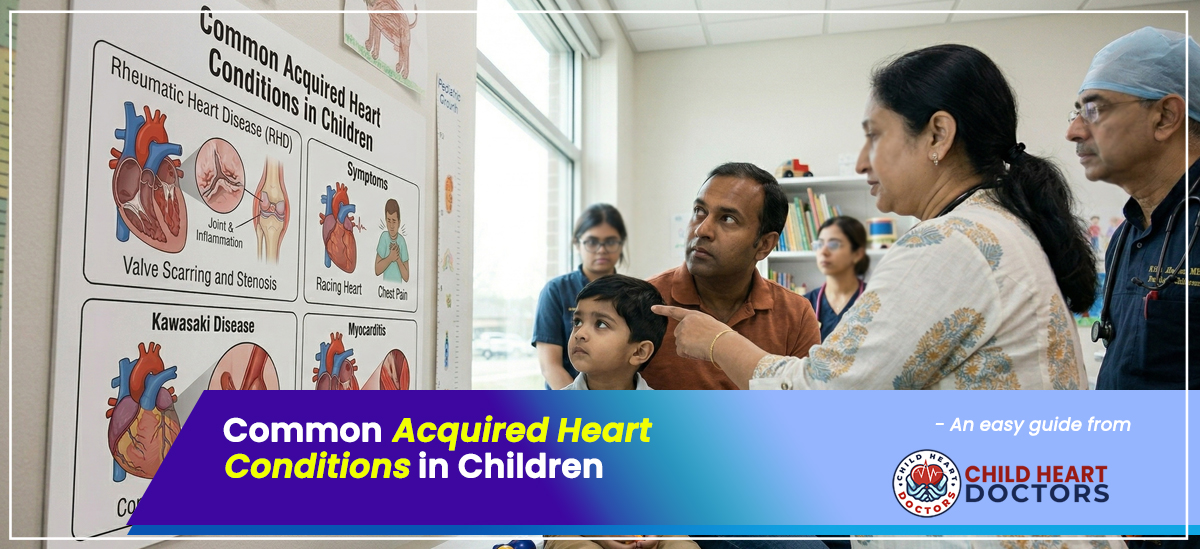
Some common examples include rheumatic heart disease, myocarditis, pericarditis, Kawasaki disease, and endocarditis. These conditions can range from mild to severe, and early detection is essential to prevent long-term damage.
Parents should be alert to symptoms such as fatigue, shortness of breath, chest pain, irregular heartbeat, swelling in legs or face, and frequent respiratory infections.
Common causes of acquired heart conditions include:
- Bacterial or viral infections
- Autoimmune reactions
- Nutritional issues
- Rheumatic fever
- Inflammation
- Poor lifestyle habits such as lack of physical activity or obesity
Because the symptoms can be confusing or similar to common childhood problems, parents should stay alert and consult a child heart specialist if they notice unusual signs.
Most Common Acquired Heart Conditions in Children
Rheumatic Heart Disease
Rheumatic Heart Disease (RHD) is one of the most common acquired heart conditions in children. It develops when a child does not receive proper treatment for a throat infection caused by Group A Streptococcus bacteria. The infection triggers an abnormal immune response that affects the heart valves.
Causes
- Untreated or repeated streptococcal throat infections
- Poor access to medical treatment
- Overcrowded living spaces
Symptoms
- Fever
- Joint pain
- Fatigue
- Chest discomfort
- Shortness of breath
- Fast heartbeat
- Swelling of the legs in later stages
Treatment
A child with suspected rheumatic fever needs immediate antibiotic treatment. Long-term antibiotics may be needed to prevent repeated attacks. In severe cases, valve repair or replacement may be required. A pediatric cardiologist can guide parents through the right treatment plan.
Kawasaki Disease
Kawasaki Disease is an inflammatory disorder that mainly affects young children. It causes inflammation of blood vessels, including the coronary arteries that supply the heart. If untreated, it can lead to coronary artery aneurysms.
Causes
The exact cause is unknown. Experts believe it may be related to infections that trigger abnormal immune system reactions.
Symptoms
- Persistent fever
- Rash
- Red eyes
- Swollen hands and feet
- Cracked lips
- Enlarged lymph nodes
Treatment
Children require hospitalization for intravenous immunoglobulin (IVIG) therapy. This reduces inflammation and protects the heart. Regular follow-ups with child heart specialists help monitor long-term heart function.
Viral Myocarditis
Myocarditis is inflammation of the heart muscle that affects the heart’s ability to pump blood. Viral infections are the most common cause. Sometimes children recover fully, but in some cases, the condition can lead to heart failure.
Causes
- Common viral infections like influenza, enterovirus virus, adenovirus, etc.
- COVID-19 and post-viral complications
Symptoms
- Tiredness
- Chest pain
- Fast breathing
- Rapid heartbeat
- Fainting spells
- Swelling of legs or face (in severe cases)
Treatment
Treatment depends on severity. Mild myocarditis may resolve with rest and medication, but severe cases need hospitalization. Regular monitoring by a pediatric cardiologist ensures proper recovery.
Pericarditis
Pericarditis is inflammation of the pericardium around the heart. It can cause sharp chest pain and breathing difficulty. The condition might follow a viral infection, injury, or surgery. Some children develop it after autoimmune disorders.
Causes
- Viral infection, such as the flu or a common cold virus
- Bacterial infection
- Autoimmune disorders
- Chest injury
- Post-surgery complications
Symptoms
- Sharp chest pain that improves when leaning forward
- Fever
- Shortness of breath
- Fatigue
- Palpitations
Treatment
Most children recover with anti-inflammatory medications. Severe cases may need specialized care by a child heart doctor team, which helps manage the condition safely.
Endocarditis
Endocarditis is a serious infection of the inner lining of the heart and heart valves. It occurs when bacteria enter the bloodstream and attach to damaged areas of the heart. Children with congenital heart defects or previous valve problems are more at risk.
Causes
- Bacterial infections
- Surgery or invasive medical procedures
- Existing heart abnormalities
- Poor oral hygiene
Symptoms
- Persistent fever
- Fatigue
- Weight loss
- Joint pain
- Skin spots or rashes
Treatment
Children require hospital admission and long courses of intravenous antibiotics. In severe cases, valve surgery may be needed. Early diagnosis by a pediatric cardiologist can help prevent complications.
Hypertension in Children
High blood pressure is no longer a problem only for adults. Many children today suffer from hypertension due to lifestyle habits, obesity, kidney issues, or hormonal disorders. If untreated, it can damage the heart, kidneys, and blood vessels.
Causes
- Obesity
- Poor diet
- lifestyle
- Hormonal imbalance
- Family history
Symptoms
Hypertension often has no symptoms. In some cases, the child may have:
- Headaches
- Dizziness
- Nosebleeds
- Vision issues
- Fatigue
Treatment
Lifestyle changes, weight management, and sometimes medications are used for treatment. Parents should take early steps because early treatment helps prevent heart enlargement and future complications.
Dilated Cardiomyopathy
Dilated Cardiomyopathy (DCM) leads to an enlarged, weaker heart that cannot pump blood efficiently. This condition can appear after infections, genetic factors, or unknown reasons.
Causes
- Viral myocarditis
- Genetic mutations
- Nutritional deficiencies
- Autoimmune reactions
Symptoms
- Shortness of breath
- Weakness
- Bloating or swelling
- Chest pain
- Fainting
Treatment
Children often require medications, lifestyle changes, or treatment for underlying causes. Serious cases may need pacemakers or heart transplantation. Early evaluation by a child heart doctor team is important for severe symptoms.
How Parents Can Identify Early Warning Signs
Acquired heart conditions may not always show sudden symptoms. Some signs appear gradually. Parents should be alert if their child has:
- Constant tiredness
- Difficulty breathing
- Swelling of legs or face
- Chest discomfort
- Slow growth
- Frequent infections
- Bluish lips or fingers
- Fast or irregular heartbeat
If a child shows any of these symptoms repeatedly, it is important to consult a child heart specialist immediately.
Diagnosing Acquired Heart Conditions
Doctors use various tests to identify heart problems in children. These include:
- Echocardiography to check heart structure and function
- Electrocardiogram (ECG) to detect rhythm issues
- Chest X-ray to examine heart size
- Blood tests to detect infections or inflammation
- Holter monitoring for irregular heartbeat
- Cardiac MRI for detailed imaging
Pediatric cardiologists use these tests for accurate diagnosis and personalized treatment for every child.
Treatment and Management of Common Acquired Heart Conditions
Treatment depends on the type of condition and how severe it is. The main aim is to control the cause, protect the heart, and prevent long-term problems. Common approaches include:
Medication:
Many acquired heart conditions can be controlled with medicines. Medicines help to control infection or inflammation.
Lifestyle changes:
Parents are guided to maintain a healthy diet, take proper rest, maintain oral hygiene to prevent infections and encourage light physical activity depending on the child’s condition.
Surgical procedures:
If medicines are not enough, the child may need a surgical procedure. In some cases, surgery may be needed to repair or replace damaged heart valves or catheter-based procedures.
Monitoring and Follow-up Care:
Children with acquired heart conditions need regular check-ups with a child heart doctor to monitor recovery and take preventive action to ensure long-term recovery.
When Should Parents Consult a Child Heart Specialist?
Parents should consult with a child heart doctor if their child:
- Has persistent fever
- Shows sudden fatigue
- Complains of chest pain
- Develops breathing difficulty
- Has fainting spells
- Shows swelling in the body
- Has a history of recent infections
If you live near Howrah, West Bengal and surrounding areas in Kolkata, consulting a Pediatric cardiologist in Kolkata or reaching out to an experienced child heart doctor team in Howrah can help ensure early diagnosis and timely care.
Preventing Common Acquired Heart Conditions in Children
While not all heart conditions can be prevented, many can be avoided with timely care.
Key preventive measures include:
- Treating throat infections early
- Maintaining proper hygiene
- Ensuring a healthy, balanced diet
- Encouraging regular exercise
- Keeping vaccinations up to date
- Maintaining dental hygiene
- Avoiding self-medication
- Taking early action when symptoms appear
Regular check-ups with a child heart specialist also help detect problems before they become serious.
Conclusion
Acquired heart conditions in children can be worrying, but many of them are treatable when diagnosed early. Parents should understand the symptoms and take medical advice without delay. Regular check-ups, a healthy lifestyle, awareness of infections, and timely treatment help protect a child’s heart health.
If a child shows unexplained fatigue, chest discomfort, or frequent infections, it is best to consult a child heart specialist. If you live in Howrah or surrounding areas in Kolkata, then you will get expert care from a pediatric cardiologist in Kolkata or a trusted child heart doctor in West Bengal. They ensure that children receive the right evaluation and treatment. With proper guidance and support, most children can recover well and enjoy a healthy, active life.
FAQ's on Common Acquired Heart Conditions in Children
What are acquired heart conditions in children?
What is the most common acquired heart disease in children?
How can I tell if my child has a heart condition?
What causes Rheumatic Heart Disease (RHD)?
What are the symptoms of Kawasaki Disease?
Is Myocarditis in children dangerous?
What is the difference between congenital and acquired heart disease?
Can acquired heart conditions in children be prevented?
How are these heart conditions diagnosed?
Where to find doctor for Common Acquired Heart Conditions in Children in Kolkata & Howrah?
Disclaimer: This article is for informational purposes only and does not constitute medical advice. Always consult with a qualified cardiac specialist for diagnosis and treatment related to your personal health condition.
Read Also:
- Child Heart Doctor’s Guide to Common Heart Defects and Treatment in Bangladesh
- Advanced Care for Pediatric Heart Failure: Insights from a Child Heart Expert in Howrah
- Understanding Pulmonary Arterial Hypertension (PAH) in Children
- A Guide to Interventional Cardiology Procedures by Child Heart Specialist in Howrah
- Complete Guide to Congenital Heart Disease Care in Kolkata 2026
- Fetal Echocardiography Test in Howrah: Purpose, Procedure, and Risks
- VSD Treatment in Children in Kolkata: Symptoms, Diagnosis and Treatment Options
- Pediatric Heart Care in Jharkhand in 2026 by Child Heart Doctors
- Early Diagnosis of Heart Conditions by a Newborn Heart Doctor in Howrah
- Interventional Cardiology: Minimally Invasive Procedures for Children
- Caring for a Baby’s Heart: Insights from a Pediatric Heart Doctor in Howrah
- Common Heart Conditions in Children
- Pediatric Cardiac Care Availability in Jharkhand
- Advanced Cardiac Imaging Services for Children in Howrah