
An essential guide on ‘ASD Treatment in Children in Kolkata: Symptoms, Diagnosis and Treatment Options’ by a group of Child Heart Doctors
Introduction
A child’s heart health plays a vital role in their overall growth and quality of life. One common congenital heart condition seen in children is Atrial Septal Defect (ASD). ASD is a hole in the wall between the upper chambers of the heart that allows blood to flow in the wrong direction. While some children show symptoms early, others may appear healthy until the condition is detected during a routine check-up. Understanding ASD at the right time helps parents take informed decisions about care and treatment.
Today, medical advances have made ASD treatment in children in Kolkata and surrounding areas safer and more effective than ever before. From early diagnosis using advanced heart imaging to modern treatment methods like catheter-based device closure, children can receive timely care with excellent outcomes. Experienced heart specialists now focus not only on treatment but also on long-term follow-up and family support.
Choosing the right medical team is equally important. Whether you’re in Howrah, Kolkata, or anywhere in West Bengal, understanding this condition and knowing where to find the best care can make all the difference. Families often look for the best child heart doctor team for ASD device closure in Kolkata, where specialized pediatric cardiologists work together to provide accurate diagnosis and minimally invasive treatment options. For adults who were diagnosed later in life, access to the best cardiologist in Howrah for ASD closure in adults ensures proper care and prevention of future heart complications. With advances in medical technology and the expertise of skilled pediatric cardiologists, children with ASD can lead healthy, active lives. In this article, we’ll discuss the symptoms, diagnosis, and treatment options of ASD in children.
What is ASD (Atrial Septal Defect)?
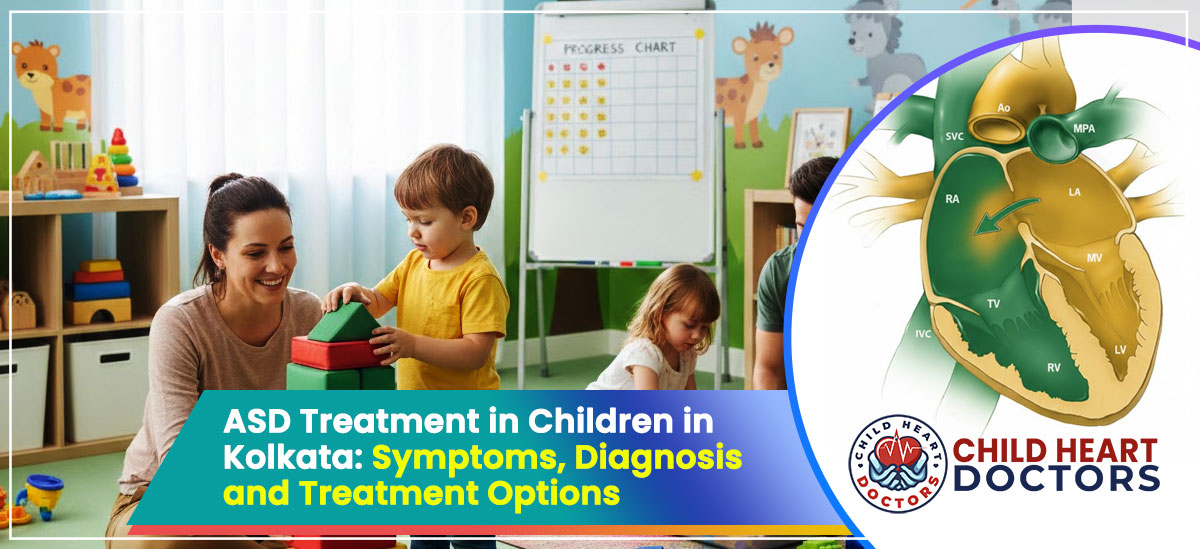
ASD, or Atrial Septal Defect, is a heart condition present from birth. It means there is a hole in the wall that separates the two upper chambers of the heart. Because of this hole, oxygen-rich blood and oxygen-poor blood mix together. This makes the heart work harder than normal. Some ASDs are small and harmless, while others may need treatment to avoid future heart or lung problems.ASDs are one of the more common congenital heart conditions, but thanks to modern medicine, most children with ASD go on to lead normal, active lives after treatment.
Symptoms of ASD in Children
Many children with ASD do not show symptoms early in life, especially if the hole is small. That’s why ASDs are sometimes first noticed during a routine doctor visit when a heart murmur is detected. Symptoms can include:
- Shortness of breath during play or exercise
- Tiring easily, especially with activity
- Frequent chest infections
- Swelling of the legs, feet, or abdomen (less common in young children)
- Irregular heartbeat (palpitations) in older children or adults
- Slow weight gain
Older children may complain of a fast heartbeat or chest discomfort. Symptoms often become clearer as the child grows.Symptoms vary greatly and can be subtle, any concerns about breathing, energy levels, or growth should be discussed with a child’s doctor early.
How is ASD Diagnosed in Children?
ASD is often detected during a routine check-up when a doctor hears an unusual heart sound. To confirm the condition, a cardiologist usually recommends tests such as:
- Echocardiogram (Echo) – a painless ultrasound of the heart to see the structure and blood flow.
- Electrocardiogram (ECG) – measures electrical activity of the heart.
- Chest X-ray – can show heart size and lung condition.
- Bubble study – a special echo that uses tiny bubbles to show how blood flows through the heart.
- Pulse Oximetry: A simple test that measures oxygen levels in the blood using a small sensor attached to the finger.
- Cardiac MRI or CT Scan: In complex cases, these advanced imaging techniques provide even more detailed views of the heart’s structure.
Time of diagnosis can vary. Some babies are diagnosed soon after birth, while in others, ASD is only found later in childhood or even adulthood.Early diagnosis helps plan the right treatment at the right time.
When Does an ASD Need Treatment?
Small ASDs may close on their ownas a child growsand only need regular monitoring. Treatment is usually needed when the hole is large, causes symptoms, or puts extra pressure on the heart and lungs. Doctors decide the timing based on the child’s age, symptoms, and heart condition. Early treatment helps prevent long-term heart complications and supports healthy growth.
Here’s how doctors decide:
- Observation for small holes that are not causing difficulties.
- Device closure or surgery when the defect is moderate or large, or if there are symptoms.
Treatment Options for ASD in Children
Treatment for Atrial Septal Defect (ASD) in children depends on the size of the hole, symptoms, and how the heart is affected.
Regular Monitoring
For very small defects, your doctor may choose to watch your child’s heart over time with periodic echocardiograms. Many small ASDs shrink or close naturally in the first years of life.
Cardiac Catheterization and Device Closure
This is a minimally invasive treatment that fixes the ASD without open-heart surgery. For moderate to large ASDs, doctors may suggest a minimally invasive procedure called device closure. A small device is placed through a thin tube inserted from the leg to close the hole.Here’s how it works:
- A small tube (catheter) is inserted through a blood vessel in the leg.
- A special closure device is guided through the catheter and placed over the hole.
- The device seals the defect, and over time heart tissue grows around it.
This procedure usually means less pain, a shorter hospital stay, and faster recovery compared to open surgery.
Surgical Repair
If the defect is large or not suitable for device closure, open-heart surgery may be required. The surgeon closes the hole using stitches or a patch.
In this case:
- The heart is accessed through a chest incision.
- The surgeon sews a patch over the defect to close it.
This treatment is safe and gives long-term results.With proper treatment and follow-up care, most children with ASD grow up healthy and lead normal, active lives.
Recovery After ASD Treatment for Children
Recovery after ASD treatment is usually smooth, and most children return to their normal routine within a short time. The recovery process depends on the type of treatment used.
For ASD device closure, children often recover quickly. They may need to stay in the hospital for one or two days for observation. Mild discomfort or tiredness is common for a few days, but serious problems are rare. Doctors usually advise avoiding heavy physical activity for a short period. Follow-up visits and heart scans are done to ensure the device is working properly.
For children who undergo surgical ASD repair, recovery may take a little longer. Hospital stay is usually a few days, followed by rest at home. The child may feel weak at first, but strength improves gradually. Doctors provide clear instructions on wound care, medicines, and activity limits during recovery.
In most cases, children recover well and can attend school, play, and grow normally. Regular follow-up with a child heart specialist is important to monitor heart health and ensure long-term well-being.
Treatment for ASD Closure in Adults
Atrial Septal Defect (ASD) in adults is often diagnosed later in life when symptoms like shortness of breath, fatigue, or irregular heartbeat appear. The good news is that ASD can be treated safely even in adulthood with modern medical techniques.
The most common treatment today is ASD device closure, a minimally invasive procedure done through cardiac catheterization. A small device is placed through a blood vessel to close the hole in the heart without open surgery. This method usually involves less pain, a shorter hospital stay, and faster recovery.
In some cases, especially if the defect is large or has an unusual shape, surgical closure may be recommended. An experienced heart specialist carefully evaluates the condition before choosing the best treatment option.
Consulting the best Cardiologist in Howrah for ASD Closure in Adults ensures accurate diagnosis, proper planning, and safe long-term heart care.
How to Choose the Right Child Heart Doctor in Howrah & Surrounding Areas in Kolkata
Choosing the right child heart doctor is one of the most important decisions for your child’s heart health. In Howrah and nearby areas of Kolkata, parents should look beyond just the hospital name and focus on the doctor’s experience and team support.
Here are a few key points to consider:
- Specialization in pediatric cardiology and congenital heart conditions
- Experience in treating children of different age groups, including newborns
- Access to advanced diagnostic tools like echocardiography
- Choosing a doctor who explains the condition clearly, answers your questions patiently, and involves you in treatment decisions
- Performs both catheter-based and surgical closures
- Availability of a skilled medical team for both treatment and follow-up care
The Best Child Heart Doctor in West Bengal is usually supported by a well-trained and coordinated team. TheBest Child Cardiologist Team in Kolkata works together to provide accurate diagnosis, safe procedures, and compassionate care for both children and families.
ASD Treatment in Children in Kolkata and Surrounding Areas
In and around Howrah, there are specialized pediatric cardiology services focused on congenital heart conditions like ASD. These services offer advanced diagnostics, cardiac imaging, and intervention including ASD device closure.
If your child is diagnosed with ASD and you’re in Howrah or nearby, it’s important to consult a specialized pediatric cardiologist rather than a general doctor — especially when planning procedures like device closure.
Conclusion
ASD in children is a condition that can be managed very well when it is diagnosed on time and treated properly. Some children may have mild symptoms, while others may show signs only as they grow. This is why early check-ups and proper heart tests are so important. Understanding the symptoms and knowing when to consult a specialist can help prevent future heart problems.
Today, medical advances have made ASD treatment safer and more effective than ever. From regular monitoring to device closure and surgery, doctors can choose the right treatment based on the child’s condition. With the support of an experienced child heart doctor team, most children recover well and lead active, healthy lives.
For families in Howrah, Kolkata, and across West Bengal, access to skilled pediatric cardiologists and modern heart care facilities offers confidence and peace of mind. Timely diagnosis, expert care, and proper follow-up are the keys to ensuring the best outcome for children with ASD.
Disclaimer: This article is for informational purposes only and does not constitute medical advice. Always consult with a qualified cardiac specialist for diagnosis and treatment related to your personal health condition.
Read Also:
- The Importance of Early Intervention for Congenital Heart Defects
- Early Diagnosis of Heart Conditions by a Newborn Heart Doctor in Howrah
- Interventional Cardiology: Minimally Invasive Procedures for Children
- Caring for a Baby’s Heart: Insights from a Pediatric Heart Doctor in Howrah
- Child Heart Doctors: Find Best Fetal Echo Doctor in Howrah in 2025
- Common Heart Conditions in Children
- Pediatric Cardiac Care Availability in Jharkhand
- A Guide to Pediatric Arrhythmias from the Child Heart Doctors
- Finding the Best Pediatric Cardiologist in Howrah for Your Child
- Child Heart Doctors in Assam in 2025: An Inside View
- Advanced Cardiac Imaging Services for Children in Howrah